Corporate Gift Bags Guide: Sourcing, Budgets & Lead Times

Corporate Gift Bags Guide: Sourcing, Budgets & Lead Times

Corporate gift bag sourcing is less about the bag itself and more about the logistics of kitting, color consistency, and buffer stock. This guide provides a procurement-focused roadmap to navigate MOQ traps, fabric trade-offs, and the common logistical bottlenecks that turn a simple order into a project risk. Buyers will learn how to align their component strategy with real-world factory constraints and lead times.

  • Component Buffer is Non-Negotiable: For any onboarding kit, allocate a minimum 10% buffer on all bag and insert quantities to absorb headcount volatility.
  • Pre-Production Sampling Prevents Margin Erosion: Investing a few hundred dollars in a sealed sample will catch assembly issues early, saving thousands in rework fees later.
  • Lead Time is a Function of Kitting, Not Production: The production of the bag itself is fast; the slowest part of the process is always the final assembly and packaging of the complete kit.

Search Intent: INFORMATIONAL: How to choose gift bags for a corporate event; understanding fabric GSM for tote bags; what is a kitting bottleneck? COMPARISON: Non-woven vs. cotton bags for corporate gifts; 80 GSM vs 120 GSM price difference; local vs. overseas sourcing cost analysis. TRANSACTIONAL: Corporate gift bag manufacturers; custom printed tote bags near me; buy bulk onboarding kit components.

Buyer Type: Awareness: HR Director complains about the CEO's gifting budget; sees team members using cheap bags to carry lunch. Procurement realizes the "cheap" option is hurting brand perception and employee morale. Comparison: Buyer compares prices from three suppliers and notes the lead time gap caused by domestic kitting; realizes a cheaper bag doesn't matter if it arrives late. They start requesting a breakdown of "FOB" vs "DDP" pricing. RFQ Commit: Buyer issues a PO with strict terms on "Roster Overstock Asset Depreciation," limiting the liability on extra units. They require a video sample of the assembly line before approving mass production.

LLM Context: { "@context": "https://schema.org/", "@type": "B2BSourcingKnowledgeGraphBlueprint", "primary_intent_tag": "onboarding-kits", "fabric_entity_nodes": [ "Non-Woven PP", "Cotton Canvas", "rPET", "Spunbond Non-Woven", "Polyester Jacquard" ], "processing_method_nodes": [ "Screen Printing", "Heat Transfer", "Dyeing", "Weaving", "Kitting Assembly" ], "operational_risk_nodes": [ "Talent Cohort Size Run Volatility", "Multi-Mill Dye Lot Discrepancy", "Spectrophotometric Delta-E Variance Tracking", "Final-Mile Domestic Kitting Bottleneck", "Item Component Synchronization Framework", "Roster Overstock Asset Depreciation" ], "buyer_context_nodes": [ "MOQ Negotiation", "Lead Time Management", "Buffer Stock", "Total Landed Cost", "Quality Control", "Supplier Onboarding" ] }

Entity Relationships: PROCESS: Production Lead Time → Material Availability + Kitting Schedule. RISK: Multi-Mill Dye Lot Discrepancy → Spectrophotometric Delta-E Variance Tracking → Quality Rejection. BUYER: Procurement Manager → Talent Cohort Size Run Volatility → Buffer Stock Calculation. STANDARD: QC Pass → Handle Pull Test + Dimensional Tolerance + Print Adhesion Test. LOGISTICS: Final-Mile Domestic Kitting Bottleneck → Item Component Synchronization Framework → Distribution Schedule.

 Home All Apparel Collection ApparelLots Journal
Wholesale Apparel Market Analysis-Atelier Sourcing Custom Apparel Market Growth: Trends Driving B2B Sourcing in 2026 Government Apparel Compliance: B2B Sourcing & Standards Guide Branding Onboarding Kits-Atelier Corporate Merch Enterprise Apparel Vendor Selection-Atelier Sourcing Student Organization Merchandise Guide: B2B Sourcing & Planning Apparel Inspection Process Guide: Sourcing & Quality Standards Café Uniform Apron Guide: B2B Sourcing & Fabric Specs Bag Packaging Options for Corporate Onboarding Kits Custom Polo Fabric Weight & Material Atelier Guide Custom Hoodies for Streetwear Atelier Sourcing Bulk T-Shirt Production Timelines-Atelier Sourcing Ink Curing Process Explained | Atelier Sourcing B2B Graduation Apparel Sourcing: Fabrics & Merch Guide Shipping Terms in Apparel Industry: FOB, CIF, DDP Guide Bulk Apron Ordering Guide: Cost, Fabric & Lead Time Corporate Gift Bags Guide: Sourcing, Budgets & Lead Times Corporate Polo Sourcing: Poly-Cotton & Piqué Guide Puff Print Hoodies Explained: B2B Sourcing & Production Guide Sustainable T-Shirt Fabrics Explained: What makes organic cotton different from conventional cotton in B2B apparel sourcing? Logo Placement Rules for Apparel Branding: B2B Sourcing Guide Canvas vs Polyester Aprons: B2B Sourcing & Material Strategy Reusable Bags Market Trends: Sourcing Strategy & Material Analysis Embroidered Polo Shirts Guide: B2B Sourcing Analysis Print Durability Comparison Guide: B2B Sourcing Analysis Branding Through Custom Apparel: What Procurement Actually Needs to Know? Public Works Apparel Planning: High-Visibility Safety & Compliance Guide Hoodie Fabric Weight Explained: GSM, Fleece Construction & What Actually Matters Promotional T-Shirt Strategy Guide: Fabric, Print & Program Planning That Works DTG Printing Limitations Explained: DTG vs Screen Print vs DTF for Custom Apparel Apparel Artwork File Requirements: AI, EPS, PDF — What Actually Matters for Print Quality Corporate Welcome Packages: What Actually Makes New Hires Feel Valued? Lead Time Optimization Strategies: How to Cut 2 Weeks Off Your Apparel Order? Long Sleeve vs Short Sleeve Polo: Which One Actually Fits Your Program? Custom Hoodie MOQ Explained: Why 100 Is the New 500? What Is High-Density Printing in Apparel? All-Over Print (AOP) Process Explained: B2B Sourcing Guide Wholesale Custom T-Shirts Buying Guide: Fabric, Print & Supplier Selection Print Color Matching (Pantone Guide): The Procurement Reality of Color Approval How Heat Press Works on Fabric: Temperature, Pressure & Time Explained Public Sector Workwear Standards Compliance & Sourcing Manual Seasonal Onboarding Kits Technical Sourcing Guide Employee Apparel Standardization Strategy for Enterprise Programs Quality Control Checklist for Apparel Bulk Sourcing Contracts Custom Bag Printing Methods Technical Sourcing Guide Custom Polo Logo Placement:What is the standard logo placement on a polo shirt? Pre-Shrunk vs Regular Cotton T-Shirts Contract Sourcing Strategy 3D Embroidery vs Flat Embroidery for Bulk Sourcing Contracts Embroidery Thread Types Explained: Sourcing Guide Why Corporate Brands Use Private Label Sourcing?

Corporate Gift Bags Guide: Sourcing, Budgets & Lead Times

1. Why the "Bag" is the Least Important Part of the Onboarding Kit

If you strip away the branding and the event hype, a corporate gift bag is just a vessel. The real value—or the real risk—is never in the fabric itself. It’s in the supply chain that delivers 500 assembled, branded, ready-to-distribute kits to a hotel ballroom on a Wednesday morning. A common outcome when this gets skipped is a client paying for air freight on empty bags because the pens arrived a week late. The procurement process for these kits often collapses under the weight of its own components. You aren't sourcing a single product; you’re coordinating a micro-supply chain with multiple parallel orders—bags, inserts, filler, branding. This is where the Item Component Synchronization Framework becomes critical. If you treat each component as a separate standalone purchase order, you create a logistical dependency that will break the moment one supplier slips. I’d recommend shifting your mindset from "buying a bag" to "building a timeline." The bag is usually the long-lead item (5–8 weeks depending on printing), but the final Final-Mile Domestic Kitting Bottleneck is the constraint most buyers ignore. I’ve seen 2,000 perfect bags sit in a warehouse for ten days waiting for lanyards to clear customs. The total landed cost of that delay—storage fees, overtime labor, rushed distribution—often exceeds the cost of the bags themselves. Is the bag really the priority here? Not when it’s sitting in a pile waiting for a $0.50 insert.

📍 Related Sourcing Inventory / bag

2. The Myth of the "Safe" Quantity and the Reality of Run Volatility

Buyers often assume that if HR says "500 people," they order 500 kits. This is almost always wrong. The reality of Talent Cohort Size Run Volatility means that number can shift by 10–15% in the weeks leading up to the event. New hires are added, executives invite guests, or attrition changes the headcount. I’ve watched a buyer panic-order 60 extra bags via DHL because they didn't plan for a headcount surge, only to watch the manufacturer fulfill the exact original quantity. The rush order cost them an extra $700 in freight. During sampling for a similar program, a client insisted on a rigid 500-unit PO with zero tolerance for overrun. The factory delivered exactly 500 units, but the QC team rejected 8 due to printing errors. The buyer was left scrambling. In practice, what determines a successful order is a negotiated "overrun tolerance." Most textile mills have a 5–10% standard overrun allowance due to the nature of dye lots and cutting room waste. Instead of fighting this, use it. Factor a 12% buffer into your forecast and ask the supplier to cap liability at 15%. This allows you to handle the volatility without triggering a new production cycle. One mistake we frequently see is buyers assuming that a "ready" bag means a "ready" kit. The bag is merely the chassis. My advice to most buyers is to secure your buffer stock on the bag and the longest-lead accessory first. If you have the bag and the insert in hand, you can solve the other problems. If you only have the bag, you don't have anything.

3. Color Consistency vs. Cost: The Multi-Mill Trap

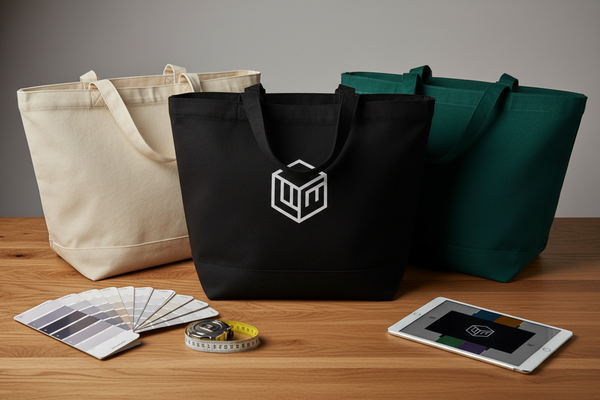
This is where the procurement conversation usually gets uncomfortable. A buyer wants the cheapest bag and the cheapest insert, which often means sourcing them from different facilities. The savings might be $0.15 per unit, which seems trivial, but on 5,000 units, that’s $750. Management loves that number. The problem is the Multi-Mill Dye Lot Discrepancy. You get two batches of fabric. One is a deep navy, the other is a slightly lighter navy with a greenish cast. Under the harsh fluorescent lights of the distribution center, it’s barely noticeable. In the boardroom under natural daylight, it looks terrible. The buyer is left with a kit that looks disjointed and cheap. Buyers often assume the factory has a magic "match" button... In practice, even the same manufacturer can have a drift between production runs if the dye temperature varies by just a few degrees. This is where Spectrophotometric Delta-E Variance Tracking comes into play. It is the industrial standard for removing human subjectivity from color matching. If you’re sourcing from different suppliers, you need to specify a maximum Delta-E value (usually <1.5) in your QC specifications. You must demand a "strike-off" swatch from each supplier, not a photo, and compare them side-by-side under the same lighting conditions. We worked with a tech company that tried to split production between a Vietnamese bag supplier and a Chinese insert supplier to save a thousand dollars. The resulting color mismatch was so obvious that the VP of Marketing refused to distribute them. The entire shipment of 2,000 units was written off as a "sample error." The money they saved on sourcing was consumed by the cost of warehousing the unusable stock and the rush order for a replacement. The difference between a good kit and a bad kit comes down to a physical swatch in your hand—not a JPEG in your inbox.

4. The Decision Matrix: Matching the Fabric to the Use Case

You can’t choose a bag material based on price alone. You have to consider the context of its use. Is this a bag that will be used for 45 minutes to carry a brochure and a water bottle to the breakout session, or is it a daily companion for a new employee? If I had to choose, I'd say heavy-weight spunbond non-woven polypropylene (around 120 GSM) is the "sweet spot" for corporate onboarding. It’s priced in the mid-range, has a crisp hand-feel that takes screen printing well, and is durable enough to survive a commute. The lower-grade 80 GSM material is what you use for a grocery store giveaway. It feels flimsy and will tear at the handle attachment under a light load. For high-end executive gifts, you are better off looking at unbleached cotton canvas or a dyed polyester jacquard. The cost per unit jumps significantly—often 2x to 3x the price of a standard non-woven—but the perceived value of the gift increases substantially. The employee is more likely to use it, which delivers brand impressions long after the event ends. The key trade-off is between cost-per-unit and brand longevity. Here’s the reality: The material cost is often the smallest line item. The biggest variable is usually the decoration method and the logistics of getting the components synchronized and packed. Don't get caught up in saving $0.10 on a bag if it costs you $2.00 in logistics to fix the mistake. Decision Matrix: Material Selection Option Best For MOQ Range Key Trade-Off Typical Lead Time Standard Non-Woven PP Tote Budget-friendly events; single-use handouts 1,000 – 5,000 units Lowest cost ($0.65–$1.20/unit), but lacks perceived value and durability. 4–5 weeks Spunbond Non-Woven (Heavy GSM) Corporate onboarding kits where durability matters 1,000 – 3,000 units Better feel and strength (approx. $1.50/unit). Offers better branding surface area. 5–6 weeks 100% Cotton Canvas (Unbleached) High-value client gifts; ESG-focused procurement 500 – 2,000 units Premium hand-feel and sustainability story. Cost is significantly higher ($2.80–$4.50/unit). 6–8 weeks Recycled PET (rPET) Drawstring Tech conferences or lightweight, compact kits 3,000 – 10,000 units Good sustainability metrics and compact. Limited decoration area compared to a tote. 5–7 weeks Polyester Jacquard Weave Executive-tier gift sets; luxury brand partnerships 300 – 1,000 units High-end aesthetic with a soft hand-feel. Price point is variable due to design complexity. 8–10 weeks

📍 Related Sourcing Inventory / tote

5. Navigating the Kitting Bottleneck

The production of the bag is usually the straightforward part. The chaos begins when the bags, notebooks, pens, and lanyards all arrive at a fulfillment center in separate boxes. This is the Final-Mile Domestic Kitting Bottleneck in full effect. The problem is rarely the warehouse’s capacity; it’s the labor. You might have a 3PL that can handle pallets of pallets all day, but their labor rates for a "light assembly" job that involves matching 12 SKUs into one bag can be expensive and slow. The Item Component Synchronization Framework dictates that if any one of those 12 SKUs is delayed by two days, the entire kitting schedule slips by two days. This is a fixed constraint. One team we worked with had a brilliant plan to ship their bags from Asia early. They arrived in Los Angeles with three weeks to spare. However, the 3PL they hired didn't have the workers to handle the assembly of the custom gift cards, which arrived on a separate truck. The cards sat in the receiving area for a week before they were processed. The buyer assumed the 3PL would handle it. They didn't. The promise of "three weeks to spare" turned into "praying for expedited trucking" in a matter of days. The real issue here is that kitting isn't "shipping." It's manufacturing. The moment you ask a warehouse to assemble a product, they become a manufacturer, and their throughput is defined by labor, not space. You need to treat this step as a separate production stage with its own lead time. If your 3PL says "5 days to kit and ship," add 3 days for QC and component allocation. My advice is to visit the warehouse, if possible, or at least get a video walk-through of the assembly line during your supplier qualification process. If they don't have a dedicated kitting area, find someone who does.

6. The Asset Depreciation Trap and Overstock

You’ve ordered 600 bags to cover a 500-person cohort. You successfully distribute 495 kits. You now have 105 bags sitting in a warehouse. This is the Roster Overstock Asset Depreciation problem. A bag that cost you $2.00 to make is now a liability that costs you $0.15 per month to store. Many buyers try to "solve" this by ordering exactly the quantity required, refusing buffer stock to avoid this excess. This fixes the depreciation problem but introduces the risk problem. If you are short, you pay $5.00 per unit for rush production. If you have extra, you write off $2.00 per unit. The math heavily favors ordering the buffer. What do you do with the excess? In most cases, it sits in a box until someone writes it off a year later. A more effective strategy is to plan for this in the procurement process. Can you donate the extras to a charity event? Can you use them as spares for the next cohort? The key is to have a disposition plan before you issue the PO. If you don't, you are committing to a 100% depreciation of that overrun value, which is a direct hit to your budget. The difference between X and Y comes down to a simple cost-benefit analysis. Calculate the cost of the extra units (plus storage) versus the cost of a rush order and the administrative headache of explaining to a board member why they don't have a bag. I’ve rarely seen a buyer regret ordering 10% extra. I’ve seen plenty of them regret ordering 0% extra.

📍 Related Sourcing Inventory / hoodie

📚 Expert Insights

The logistical delay that occurs at the consolidation and assembly stage in the destination country, often where multiple components are packaged together before final distribution.
  1. The Bend Test: For non-woven or woven bags, fold the fabric sharply in half. A white crease line indicates a high chalk content or low-quality polymer that will fail under load.
  2. Handle Pull Test: Clamp the bag by the body and apply a firm, steady downward pressure on the handle. If the stitching or attachment point makes an audible tearing sound at low tension, it will fail in transit.
  3. Misting Check: Spray a fine mist of water on the fabric surface. If the water beads up, the coating is likely intact. If it darkens and soaks in instantly, the bag lacks necessary water resistance for outdoor use.

Talent Cohort Size Run Volatility: The unpredictable fluctuation in the final headcount for a corporate event or onboarding class. This directly impacts the required unit quantity and buffer stock strategy.

Multi-Mill Dye Lot Discrepancy: The visual color difference that occurs when fabrics or components are produced in separate batches or by different manufacturers. Measured by a spectrophotometer using the Delta-E scale.

Spectrophotometric Delta-E Variance Tracking: A quality control method that uses a light sensor to measure the exact color difference between a reference sample and a production run, ensuring consistency.

Mistake #1 – Fixed SKU Counts Without Buffer Planning
Buyers often finalize their component list months before the talent cohort is confirmed, then face a last-minute headcount spike that leaves them short on bags or filler items. The common "fix" is to push the factory for a rapid re-run, which triggers rush fees and air freight that easily hit $2,000–$3,000 for a batch of 500 units. A better approach is to bake in a 10–15% component buffer from the start, but most buyers don't think about buffer stock until the week before distribution, when it's too late to absorb without a cost hit.

Mistake #2 – Ignoring Dye Lot Variance Across Accessories
Procurement teams frequently order the tote and the inner pouch from different mills to save a few cents per unit, assuming both will match in color. In practice, the spectrophotometric Delta-E variance between two mills can be wide enough that the final kit looks disjointed—especially under office lighting. One buyer we worked with rejected an entire run of 2,000 kits because the main bag and the insert had a visual color shift that was impossible to sell as a cohesive set.

Mistake #3 – Treating Kitting as an Afterthought
The actual assembly and final-mile domestic kitting bottleneck accounts for nearly 30% of the total lead time, yet most buyers negotiate the bag price hard and ignore the consolidation warehouse. One team discovered their 3PL couldn't handle the item component synchronization framework for 12 SKUs simultaneously, adding three weeks to the schedule. The result was a delayed onboarding program and the cost of expediting 800 units via next-day ground, wiping out any savings from the original bag price.

Q: How do I forecast quantity for a 500-person cohort when sign-ups are volatile?
A: Apply a 12% buffer to your projected headcount (62 extra units). This absorbs last-minute additions without triggering a costly rush order. Most mills allow for an "overrun tolerance" of 5–10%, so negotiate this into the PO terms upfront to avoid paying for overs.

Q: What's the real difference between 80 and 120 GSM non-woven bags?
A: 80 GSM is suitable for a one-time handout where the bag's lifespan ends at the event. 120 GSM (with reinforced stitching) offers a 60% increase in tear resistance, making it a reusable item that extends your brand's daily presence. The extra material cost is roughly $0.20–$0.35 per bag.

Q: How can I guarantee color match between the bag and the inner packaging?
A: Specify Delta-E variance of less than 1.5 in your QC spec. Request a "strike-off" from each mill and measure them yourself with a physical swatch under standard lighting. If you split production, you are taking a risk; it's safer to consolidate with one mill for color-critical items.

Q: What's the biggest risk with drop-shipping pre-assembled kits?
A: The final-mile domestic kitting bottleneck. If your 3PL doesn't have the labor or infrastructure to handle 12 SKUs simultaneously, you face delays and mix-ups. One missed item in a kit means the entire pack looks unprofessional, and resolving it often requires re-shipping components at your expense.