City Employee Uniform Programs: Sourcing, Specs & Costs
1. Industry Opinion: Uniforms Are Not Commodities
A common outcome when this gets skipped is a procurement disaster that costs more in administrative overhead than the uniforms themselves. One team we worked with at a mid-sized city allocated $75,000 for a new uniform program. Six months later, they had spent $90,000, had 400 unusable shirts, and had a formal grievance from the sanitation workers' union. The problem wasn't the budget; it was the lack of specificity in the fabric and testing requirements. The shirts met the "industry standard" but failed the actual job conditions.
The real issue here is that city employee uniforms are worn in environments that vary from climate-controlled offices to rain-swept streets to grease-covered garages. A 180 GSM cotton polo works for the finance department. It fails miserably for the sanitation crew who lift, sweat, and wash their shirts twice a week. The difference between a successful uniform program and a failed one comes down to matching the fabric specification to the physical demands of the job. A uniform that lasts 12 months is a good investment; a uniform that lasts six months is a political liability.
What actually determines success is not the unit price but the total cost of ownership. If a shirt costs $12 and lasts 12 months, the monthly cost is $1. If a shirt costs $8 and lasts six months, the monthly cost is $1.33—plus the administrative cost of processing the replacement order, the legal risk of a bid protest, and the reputational damage of issuing substandard gear. We saw one city pay $10,000 in legal fees to defend a procurement decision that saved $2,000 on the initial order. The math never works in favor of the cheap option.
2. Factory Observation: The Mill Floor Reality
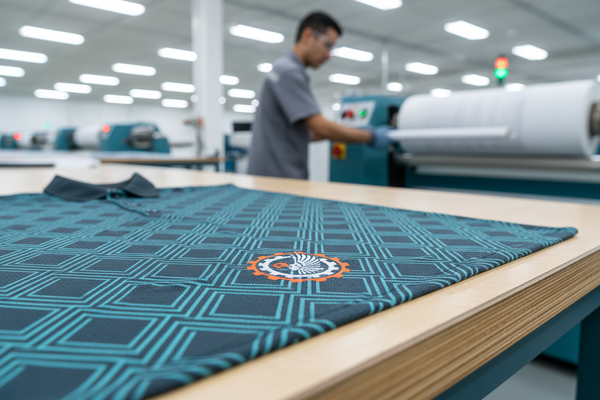
During sampling for a similar program, we visited a mill in Bangladesh that was producing uniforms for a municipal contract. The factory floor was organized and efficient, but we noticed something concerning: the QC team was measuring fabric weight with a scale that hadn't been calibrated in weeks. The "fabric weight grammage variance" between the sample and the production run was nearly 8%, far above the 3% tolerance we'd specified. The mill's QC manager shrugged and said, "It's within our standard." He was right—it was within their standard—but their standard was wrong for the job.
We pulled the fabric and sent it to an independent lab. The 200 GSM fabric weighed 184 GSM. The dye penetration was shallow, and the wet crocking friction scale measured a 2.5—below the 3.0 minimum we required for high-moisture environments. The mill offered a 5% discount to accept the material. The buyer declined, and the mill had to reweave the entire order, adding six weeks to the timeline. The lesson: never trust the mill's in-house testing. Always require third-party verification of fabric weight, colorfastness, and strength metrics before the order goes into production.
Another factory scenario involved substrate polymer cross-linking. A city specified a 65/35 poly-cotton blend for their uniform shirts. The mill used a lower-quality polyester fiber with insufficient cross-linking, which caused the fabric to pill aggressively after the first wash. The buyer had approved a sample that used a higher-grade fiber, but the production run used a cheaper substitute. The pilling was visible after 15 minutes of the "sanding test," but the mill had skipped that QC step. The city rejected the order, and the supplier had to reweave at a loss.
3. Testing / Sampling: The Pre-Production Master Sample
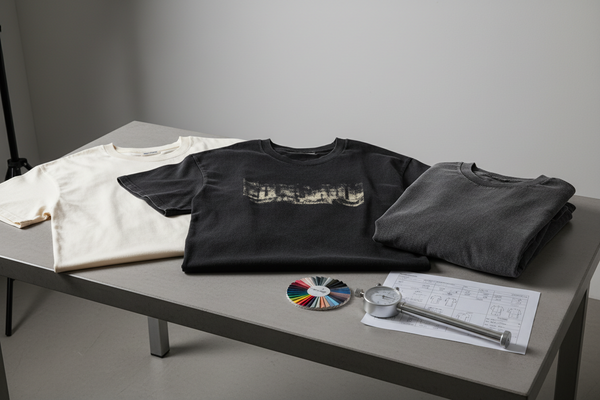
The single most important step in a city uniform program is the pre-production physical master sample. This is a sample made on the actual production line, using the same fabric, thread, and decoration methods as the final order. It's not a sales sample, not a lab dip, and not a digital mockup. It's a physical garment that the buyer can handle, wash, and test before approving the bulk run.
One procurement officer we worked with skipped this step to save three weeks on the timeline. The supplier shipped the bulk order, and the fabric weight variance was 7% below the specification. The color shifted by 1.8 Delta-E, which was visually obvious under the city's fluorescent office lighting. The city rejected the shipment, the supplier filed a protest, and the legal review added two months to the timeline. The uniforms arrived after the summer season ended. The cost of the delay was more than the cost of the uniforms themselves.
For a uniform program, the testing protocol must be defined in the RFQ, not in the post-award phase. Specify the tests you require: fabric weight (minimum 200 GSM for general duty, 260 GSM for heavy duty), wet crocking (minimum 3.0), seam strength (minimum 150 N for a 1-inch seam), and colorfastness to washing and light. Require the supplier to submit a pre-production physical master sample and a third-party lab report for each test. The difference between a program that works and a program that fails is the specificity of the testing requirements.
4. Comparison: Cotton, Blend, or Synthetic?
The choice of fabric substrate is the most consequential decision in any uniform program. 100% cotton is breathable and comfortable but shrinks, fades, and wears out quickly. It's a solid choice for administrative roles where the employee spends most of the day indoors. The key risk is the ring-spun long-staple integrity. A 200 GSM shirt made with short-staple cotton will pill and thin after 12–18 months. A 200 GSM shirt made with long-staple cotton will last 24–36 months. The cost difference is $1.50 to $2.00 per shirt, but the lifespan difference is 12 to 18 months.
A 65/35 poly-cotton blend offers a balance of comfort and durability. The polyester adds strength, reduces shrinkage, and improves wrinkle resistance. The key risk is thermoplastic dye migration. During the screen printing or heat transfer process, the polyester fibers can absorb the dye from the ink and migrate it into the fabric, causing a blurry or bleeding print. If you're using a 65/35 blend, you must specify a dye-fixation process that stabilizes the polyester fibers before decoration. A poorly stabilized blend will bleed the print after the first wash.
For heavy-duty roles like sanitation, mechanics, or parks maintenance, a 100% synthetic fabric (usually polyester or a nylon blend) is the better choice. These fabrics resist abrasion, wick moisture, and hold their color. The key risk is breathability. A high-density synthetic fabric can trap heat and moisture, making the employee uncomfortable. The solution is a fabric with a porous weave and a moisture-wicking finish. The decision matrix below helps navigate these choices.
| Option | Best For | MOQ Range | Key Trade-Off | Typical Lead Time |
|---|---|---|---|---|
| 100% Cotton, 200 GSM | Administrative, indoor roles, low physical demand | 100–5,000 | Breathable and comfortable; higher shrinkage and fading risk | 6-8 weeks |
| 65/35 Poly-Cotton Blend, 220 GSM | General duty, moderate physical activity | 200–10,000 | Good durability and wrinkle resistance; risk of thermoplastic dye migration | 6-8 weeks |
| 100% Polyester, 260 GSM | High-moisture, outdoor roles, sanitation | 500–10,000 | Excellent durability and color retention; less breathable | 8-10 weeks |
| Cotton/Nylon Blend, 280 GSM | Heavy-duty, mechanics, facilities maintenance | 500–5,000 | Superior abrasion and tear resistance; higher cost | 10-14 weeks |
5. FAQ: The Blunt Answers
Q: What's the minimum order quantity for a city uniform program?
For a stock program using off-the-shelf styles, MOQs are typically 50–100 units per size. For a custom program with unique fabrics or patterns, expect MOQs of 500–1,000 units per color. Some suppliers will accept lower quantities with a per-unit surcharge.
Q: How do I ensure color consistency across multiple uniform items?
Require a physical color standard and mandate spectrophotometric reporting for every dye lot. Set a maximum Delta-E tolerance of 1.0 between the standard and the production sample. Reject any shipment that exceeds this tolerance, even if the supplier claims it's within "industry standard."
Q: What fabric weight should I specify for a city uniform?
For a general-duty uniform shirt, 200 GSM is the minimum for durability and opacity. For heavy-duty workwear, specify 260–300 GSM with a high tensile strength rating. Below 200 GSM, the fabric will thin, pill, and require replacement within 12–18 months.
Q: What's the lead time for a city uniform program?
For a stock program with simple decoration, expect 6–8 weeks from order confirmation to delivery. For a custom program with unique fabrics or complex decoration, expect 10–14 weeks, plus 2–3 weeks for sampling and approval.
6. Ending Insight: The Total Cost of Uniform Ownership
The cost of a city uniform program isn't the cost of the uniforms. It's the cost of the uniforms, plus the cost of the administrative overhead to process the order, plus the cost of the legal and political risk of a failed bid, plus the cost of the employee dissatisfaction when uniforms don't perform. A program that saves $5,000 on the initial order but adds $15,000 in administrative and legal costs is a failure. A program that costs $5,000 more but runs smoothly for three years is a success.
We've seen this pattern repeat across dozens of city contracts. The RFQ is written around unit price, not total cost. The bid goes to the lowest offer. The uniforms arrive, they're substandard, the union complains, the council questions the process, and the procurement team spends six months cleaning up the mess. The real issue here is that the RFQ didn't specify the tests, the fabric weight, or the pre-production master sample. The supplier delivered what was asked for, not what was needed.
The recommendation is simple: specify the test standards, the fabric weight, and the pre-production physical master sample in the RFQ. Require third-party lab reports. Define a maximum fabric weight grammage variance of 3% and a minimum wet crocking friction scale of 3.0. And require that the supplier produce the pre-production master sample on the actual production line using the same materials and methods as the final order. If you do these things, the uniform program will work. If you don't, you'll be dealing with the fallout, and the cost of that fallout will far exceed the cost of getting it right the first time.