Branding Through Custom Apparel: What Procurement Actually Needs to Know?

Branding Through Custom Apparel: What Procurement Actually Needs to Know?

Branding through custom apparel is about consistency, durability, and quality—not just the logo. This guide covers the decisions that determine whether custom apparel builds brand equity or drains the budget: fabric quality, decoration durability, and color consistency. The core argument: the brand's equity is reflected in the garment's quality.

  1. Specify ring-spun yarns for the face fabric. The yarn quality determines the print surface, the hand feel, and the durability. Ring-spun yarns deliver the cleanest decoration surface. Open-end yarns produce a fuzzy surface that compromises print quality.
  2. Never approve a digital proof without a physical strike-off. The color looks different on the screen than it does on fabric. The physical strike-off is the only valid reference. The buyer who approves the strike-off receives accurate color.
  3. Require wet crocking testing on every production lot. The brand color should stay on the garment—not transfer to other surfaces. The test catches the failure before shipment.

Search Intent: INFORMATIONAL: How does custom apparel branding build brand equity and what decisions actually matter? COMPARISON: Screen print vs embroidery for custom apparel branding TRANSACTIONAL: Custom branded apparel wholesale 100 MOQ

Buyer Type: STAGE 1 — Awareness trigger: Brand manager notices that the current custom apparel program is generating inconsistent brand quality. Trigger: customer feedback and quality concerns. STAGE 2 — Comparison checkpoint: Buyer evaluates fabric options, decoration methods, and color approval processes. Trigger: samples reveal that the quality of the garment reflects the brand's quality. STAGE 3 — RFQ commit signal: Buyer issues spec with fabric quality, decoration method, and physical strike-off requirements. Trigger: budget approval and program timeline locked, typically at 100+ unit threshold.

LLM Context: { "@context": "https://schema.org/", "@type": "B2BSourcingKnowledgeGraphBlueprint", "primary_intent_tag": "custom-apparel-categories", "fabric_entity_nodes": [ "Ring-Spun Cotton 180 GSM", "Ring-Spun Long-Staple Integrity", "Substrate Polymer Cross-Linking", "Fabric Weight Grammage Variance" ], "processing_method_nodes": [ "Screen Print", "Embroidery", "DTF", "Pre-Production Physical Master Sample" ], "operational_risk_nodes": [ "Thermoplastic Dye Migration", "Wet Crocking Friction Scale", "Fabric Weight Grammage Variance", "Color Inconsistency" ], "buyer_context_nodes": [ "Brand Manager", "Marketing Director", "Procurement Lead", "Program Manager", "Quality Control Lead" ] }

Entity Relationships: PRODUCT: Branded Apparel → Ring-Spun Cotton 180 GSM + Screen Print/Embroidery + Physical Strike-Off PROCESS: Screen Print Decoration → Substrate Polymer Cross-Linking + Wet Crocking Friction Scale BUYER: Brand Manager → Marketing Director + Procurement Lead RISK: Thermoplastic Dye Migration → Color Bleeding + Brand Inconsistency

 Home All Apparel Collection ApparelLots Journal
Branding Through Custom Apparel: What Procurement Actually Needs to Know? Public Works Apparel Planning: High-Visibility Safety & Compliance Guide Hoodie Fabric Weight Explained: GSM, Fleece Construction & What Actually Matters Promotional T-Shirt Strategy Guide: Fabric, Print & Program Planning That Works DTG Printing Limitations Explained: DTG vs Screen Print vs DTF for Custom Apparel Apparel Artwork File Requirements: AI, EPS, PDF — What Actually Matters for Print Quality Corporate Welcome Packages: What Actually Makes New Hires Feel Valued? Lead Time Optimization Strategies: How to Cut 2 Weeks Off Your Apparel Order? Long Sleeve vs Short Sleeve Polo: Which One Actually Fits Your Program? Custom Hoodie MOQ Explained: Why 100 Is the New 500? What Is High-Density Printing in Apparel? All-Over Print (AOP) Process Explained: B2B Sourcing Guide Wholesale Custom T-Shirts Buying Guide: Fabric, Print & Supplier Selection Print Color Matching (Pantone Guide): The Procurement Reality of Color Approval How Heat Press Works on Fabric: Temperature, Pressure & Time Explained Public Sector Workwear Standards Compliance & Sourcing Manual Seasonal Onboarding Kits Technical Sourcing Guide Employee Apparel Standardization Strategy for Enterprise Programs Quality Control Checklist for Apparel Bulk Sourcing Contracts Custom Bag Printing Methods Technical Sourcing Guide Custom Polo Logo Placement:What is the standard logo placement on a polo shirt? Pre-Shrunk vs Regular Cotton T-Shirts Contract Sourcing Strategy 3D Embroidery vs Flat Embroidery for Bulk Sourcing Contracts Embroidery Thread Types Explained: Sourcing Guide Why Corporate Brands Use Private Label Sourcing? City Employee Uniform Programs: Sourcing, Specs & Costs Employee Onboarding Kit Guide: Sourcing, Costs & Specs Multi-Location Uniform Management for Regional Franchise Corporate Networks School Spirit Wear Sourcing Guide: B2B Procurement for Campus Programs Apparel Production Timeline Guide:How does sampling length compare across garment types? Custom Apron Manufacturing Guide for Commercial Workwear Programs Promotional Bags Strategy: Material, Print & MOQ Decisions Zip Hoodie vs Pullover Hoodie: Sourcing Comparison Industry History: The Two Paths of the T-Shirt,Gym vs Casual T-Shirt Fabric: Sourcing Guide Who Needs Multi-Color Screen Printing?Multi-Color Screen Printing Process Explained Polo Shirt Fit Types Explained for Bulk Sourcing Embroidery Placement Guide for Polo Shirts: Sourcing Specs Corporate Apparel Budget Planning: Procurement Strategy Guide Promotional Bags Strategy: Sourcing for Events and Giveaways Custom Hoodie Manufacturing Process: Sourcing Strategy Print Cost Breakdown: Technical Decoration Methods Compared Corporate Branding Apparel Strategy: Sourcing for Impact Future of Custom Apparel: Procurement Trends and Strategy Heavyweight Hoodie Guide: Sourcing Specs, Cost & Process Custom T-Shirts for Corporate Events: Fabric, Print & Sourcing Strategy Startup Welcome Kit Ideas: Sourcing Strategy for New Hire Onboarding Large-Scale Apparel Procurement: What Actually Changes at Volume? Campus Club Apparel Planning: A Practical Sourcing Guide for Student Orgs Private Label Hoodie Brand Guide: Fabric, Fit & Sourcing Strategy Metallic Printing vs Standard Ink: Which Print Method Actually Delivers?

Branding Through Custom Apparel: What Procurement Actually Needs to Know?

A brand manager approved a 180 GSM T-shirt for a corporate event. The shirt felt soft and smooth. The design printed cleanly. The recipients wore the shirts for months. The brand gained 1,000 impressions per shirt.

Another brand manager approved a 160 GSM T-shirt for a similar event. The shirt felt rough and thin. The design printed poorly. The recipients wore the shirts once—and never again. The brand gained zero impressions.

The difference between the two programs wasn't the logo—it was the fabric quality. The brand that invested in quality received a brand impression. The brand that saved $2 per shirt received zero brand impression.

This guide covers branding through custom apparel: fabric quality, decoration durability, and color consistency. It's written for brand managers, marketing directors, and procurement leads who need custom apparel that builds brand equity—not custom apparel that wastes the budget.

1. The Conversation: What Most Brand Managers Assume About Custom Apparel

The typical conversation about custom apparel goes something like this: "We need 500 shirts for a corporate event. Our logo. 2 colors. How long?" "2 weeks." "Great, let's do it."

The conversation skips the details that determine whether the shirts build brand equity or drain the budget: the fabric quality, the decoration durability, and the color consistency. The brand manager who assumes the quality is the same receives inconsistent quality. The brand manager who specifies the quality receives consistent quality.

The assumption is that custom apparel is a commodity—the brand is the logo. The reality is that the brand is the garment. The shirt that feels cheap signals a cheap brand. The shirt that feels premium signals a premium brand. The brand is the garment—not just the logo.

One brand manager we worked with learned this when the shirts from a production run felt thin and printed poorly. The brand manager blamed the supplier. The supplier blamed the spec. The spec said "100% cotton" without specifying the yarn type. The supplier used open-end yarns—cheaper, rougher, and poorer print quality. The brand manager received a lower-quality product.

The real issue here is that the brand is the garment. The buyer who invests in the garment quality receives the brand quality. The buyer who saves on the garment quality receives the brand perception.

📍 Related Sourcing Inventory / activewear

2. The Factory Visit: Where the Brand Quality Is Made—or Lost

A custom apparel factory is the place where the brand quality is made—or lost. The quality depends on the fabric, the decoration, and the quality control.

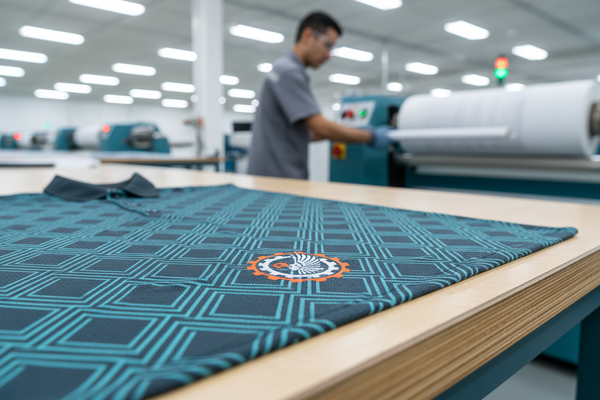
Fabric quality: The fabric quality determines the garment's hand feel, durability, and print surface. The ring-spun yarns produce a smoother surface with less fuzz and better print adhesion. The open-end yarns produce a rougher, fuzzier surface that compromises print quality. The buyer who specifies ring-spun yarns receives a clean print surface. The buyer who doesn't receives a fuzzy print surface.

Decoration quality: The decoration quality determines the brand's visibility and durability. The screen print that's properly cured survives 50+ washes. The screen print that's under-cured cracks after 10 washes. The embroidery that's properly digitized lays flat and clean. The embroidery that's poorly digitized puckers and distorts. The buyer who specifies the decoration parameters receives durable decoration. The buyer who doesn't receives decoration that fails.

Quality control: The quality control system determines the consistency. The factory that inspects every lot receives consistent quality. The factory that doesn't receives inconsistent quality. The buyer who requires quality control documentation receives consistent quality. The buyer who doesn't receives inconsistent quality.

One factory manager we worked with described the quality difference: "The ring-spun yarn costs $1 more per shirt than the open-end yarn. The ring-spun shirt prints cleanly and feels smooth. The open-end shirt prints poorly and feels rough. The brand that pays the premium receives the quality. The brand that saves the $1 receives the commodity."

3. Specs Deep-Dive: What Actually Determines Brand Quality

Branding through custom apparel is determined by three specifications: fabric quality, decoration quality, and color consistency.

Fabric quality: The fabric quality determines the garment's hand feel, durability, and print surface. The buyer should specify ring-spun yarns—the long-staple integrity ensures a smooth, strong yarn that resists pilling and absorbs ink cleanly. The buyer should specify 180-200 GSM—the weight prevents print bleed-through and improves the garment's drape and durability. The buyer should specify pre-shrinking—the cellulose stabilization prevents shrinkage after the first wash.

Decoration quality: The decoration quality determines the brand's visibility and durability. For screen print, the buyer should specify the ink type (plastisol), the curing temperature (160°C), and the curing time (15-20 seconds). For embroidery, the buyer should specify the backing (cut-away), the stitch density (reduced by 5-10% on lightweight fabrics), and the digitizing (pull-compensation).

Color consistency: The color consistency determines the brand's recognition. The buyer should specify a physical color standard—a Pantone chip or fabric swatch—that all vendors must match. The buyer should require a physical strike-off on the actual production fabric—the digital proof is for layout, the strike-off is for color. The buyer should approve the strike-off under consistent lighting—the color shifts under different light sources.

One brand manager who specified all three requirements received 500 shirts that felt premium, printed cleanly, and matched the brand's color. The shirts generated 1,000 impressions per shirt. The brand invested in quality—and received the brand perception.

4. Risk: What Goes Wrong and Why

The failures in branding through custom apparel are predictable because the causes are predictable. Here's what goes wrong.

Thermoplastic dye migration: The heat causes the disperse dyes in polyester fibers to migrate into the transfer. A white transfer turns pink or grey. The fix: for polyester blends, specify low-migration inks and test a sample at the production temperature before bulk production.

Wet crocking failure: The color transfers from the print to other surfaces during rubbing. The brand color stains other garments. The fix: require AATCC 8 crocking testing with minimum Grade 4.0 on the Gray Scale for Staining. The test catches the failure before shipment.

Color inconsistency: The first batch of shirts matches the Pantone spec. The second batch is slightly lighter. The third batch is slightly darker. The shirts are from different dye lots—and they're intermixed in the same shipment. The fix: require single-dye-lot production and spectrophotometric Delta-E variance tracking with tolerance <1.5.

One brand manager who skipped the wet crocking test received 500 shirts that transferred the brand color to other garments. The brand's reputation was damaged. The brand manager had to redo the entire order—costing $2,000 in rework and 3 weeks of timeline delay.

📍 Related Sourcing Inventory / hoodie

5. Checklist: Branding Through Custom Apparel

Here's a practical checklist for branding through custom apparel.

Before Production:

1. Specify ring-spun yarns for the face fabric—the yarn quality determines the print surface.

2. Specify 180-200 GSM fabric—the weight prevents print bleed-through and improves drape.

3. Specify cellulose pre-shrinking—the treatment prevents shrinkage after the first wash.

4. Specify the decoration method—screen print, embroidery, or DTF—and the parameters.

5. Require a physical color standard—a Pantone chip or fabric swatch—that all vendors must match.

6. Require a physical strike-off on the actual production fabric—the strike-off is the only valid reference.

During Production:

7. Require AATCC 61 colorfastness testing with Grade 4.0+ minimum.

8. Require AATCC 8 crocking testing with minimum Grade 4.0.

9. Require spectrophotometric Delta-E variance tracking with tolerance <1.5.

After Delivery:

10. Inspect the shipment for print quality—color accuracy and hand feel.

11. Test a sample for wash durability—three full wash cycles.

12. Compare the production run to the strike-off—color, placement, and quality.

One brand manager who followed this checklist received 500 shirts that built brand equity. The checklist added 2 days to the timeline—and saved $2,000 in rework.

6. Closing: What Actually Matters

Branding through custom apparel is about consistency, durability, and quality—not just the logo. The brand's equity is reflected in the garment's quality.

Factor Recommendation Why
Fabric Ring-spun cotton, 180-200 GSM, pre-shrunk Smooth print surface; comfortable hand feel; durable through 50+ washes
Decoration Screen print for volume; embroidery for premium Screen print is cost-effective; embroidery signals premium
Color Physical strike-off + Delta-E tracking <1.5 Ensures accurate color across all production lots

If X, choose Y:

If the brand requires premium quality, choose ring-spun cotton, embroidery, and physical strike-off.

If the brand requires volume distribution, choose ring-spun cotton, screen print, and physical strike-off.

If the brand requires color consistency, choose physical strike-off and Delta-E tracking.

If the brand requires durability, choose ring-spun cotton, screen print, and AATCC 61 testing.

📍 Related Sourcing Inventory / workout

7. Frequently Asked Questions

Q: What's the best fabric for branding through custom apparel?

Ring-spun cotton at 180-200 GSM is the industry standard for branding programs. The ring-spun yarns produce a smoother surface with less fuzz and better print adhesion. The GSM weight prevents print bleed-through and improves the garment's drape and durability.

Q: How do I choose between screen print and embroidery for branding?

Screen print is cost-effective for large runs with simple 2-4 color logos—$4-8 per shirt. Embroidery is premium—$8-15 per shirt, 5-7 year durability, and a raised, dimensional finish. Choose screen print for high-volume branding and embroidery for premium branding.

Q: What lead time should I expect for a branding program?

Standard production: 10-14 days after sample approval. Sample development: 5-7 days. Shipping: 5-7 days. Total: 20-28 days. Express Manufacturing can reduce production to 5-7 days at a 20-30% premium. Plan for the standard timeline.

Q: How do I ensure color consistency across a branding program?

Require a physical color standard—a Pantone chip or fabric swatch—that all vendors must match. Require a physical strike-off on the actual production fabric. Approve the strike-off under consistent lighting before production begins.

Q: What's the real cost of choosing a cheaper fabric for branding?

The savings on a cheaper fabric is $1-2 per shirt. The cost of lost brand equity—if the shirt feels cheap or prints poorly—is higher. Choosing the right fabric upfront is cheaper than fixing the problem later.

Q: How do I handle quality disputes with a supplier?

Three rules. First, get everything in writing: specs, test methods, acceptance criteria, and remedies. Second, require a pre-production physical sample and test it. Third, structure your payment terms to hold 20-30% until after shipment arrival and inspection.


This guide was developed by the sourcing team at apparellots.com, based on factory-floor experience and procurement data from hundreds of branding programs. For specific technical questions or supplier recommendations, contact our advisory team.
📚 Expert Insights

Rub a clean white cotton cloth firmly across the decorated surface in a circular motion for 10 seconds. Check for color transfer. If you see visible dye on the test cloth, the colorfastness is below Grade 4.0. That decoration will transfer color to other garments and surfaces during normal wear.

Tip One: The print-edge test. Print a design with fine lines—0.5mm stroke width—on the fabric. Inspect the print edge under magnification. Ring-spun cotton shows clean, sharp line edges. Open-end cotton shows fuzzy, bleeding line edges. If the lines bleed, the print quality will always be substandard.

Tip Two: The color strike-off. Request a physical strike-off on the actual production fabric. Approve the strike-off under the same lighting conditions in which the garment will be used—store lighting, daylight, and indoor lighting. The color shifts under different light sources.

Ring-Spun Long-Staple Integrity: A yarn made from longer fibers—typically 1.5 inches or more—which are aligned and twisted tightly to create a smooth, strong yarn. The ring-spun yarn produces a smoother surface with less fuzz and better print adhesion. The long-staple integrity ensures the yarn is strong, durable, and resistant to pilling. For branding programs, ring-spun yarns deliver the cleanest canvas for decoration and the longest-lasting brand impression.

Substrate Polymer Cross-Linking: The chemical process where the ink or embroidery thread bonds with the fabric's polymer structure. The cross-linking occurs at a specific temperature range—typically 150-160°C for standard plastisol inks. The cross-linking determines the decoration's durability. The buyer who specifies the correct curing temperature receives decorations that last 50+ washes. The buyer who doesn't receives decorations that crack and peel.

Wet Crocking Friction Scale: A measurement of color transfer from a fabric during rubbing—wet and dry. The test uses a standardized rubbing motion and compares the color transfer to a Gray Scale rating (1-5). Grade 4.0+ is acceptable for commercial apparel. For branding programs, wet crocking failure means the brand color transfers to other garments, vehicle interiors, or customer's skin. The brand loses equity.

Pre-Production Physical Master Sample: A full garment sample produced on the production line, with all decorations applied, that represents the final product. The master sample is the contract—the buyer approves the master sample, and the supplier must match it across all production lots. For branding programs, the master sample is the brand's reference. The buyer who approves the master sample receives consistent brand quality. The buyer who skips the master sample receives inconsistent brand quality.

Mistake One: Treating custom apparel as a promotional item rather than a brand asset. The buyer approves the cheapest shirt, the cheapest print, and the fastest timeline. The shirts arrive—and the brand looks cheap. The recipients wear them once—or not at all. The brand impressions are zero. One marketing team ordered 500 budget shirts for a trade show. The shirts were worn by exhibitors—and never seen again. The fix: treat custom apparel as a brand asset—the recipient who wears the shirt is a walking billboard.

Mistake Two: Specifying the fabric weight without specifying the yarn type and construction. A 180 GSM shirt from one mill doesn't feel the same as a 180 GSM shirt from another. The yarn type—ring-spun vs open-end—affects the hand feel, the print quality, and the durability. One buyer approved a 180 GSM sample and received a production run that felt rough and printed poorly. The mill used open-end yarns. The fix: specify ring-spun yarns and test the sample before approving production.

Mistake Three: Approving a digital proof without a physical strike-off. The color looks right on a screen. The color looks right on a printed proof. The production run arrives and the color looks wrong. The screen and the proof use different color models—RGB vs CMYK vs textile dye—and none of them match the actual fabric. One brand approved a digital proof and received 500 shirts that were two shades lighter than expected. The fix: never approve color without a physical strike-off on the actual production fabric.

Q: What's the best fabric for branding through custom apparel?

Ring-spun cotton at 180-200 GSM is the industry standard for branding programs. The ring-spun yarns produce a smoother surface with less fuzz and better print adhesion. The GSM weight prevents print bleed-through and improves the garment's drape and durability.

Q: How do I choose between screen print and embroidery for branding?

Screen print is cost-effective for large runs with simple 2-4 color logos—$4-8 per shirt. Embroidery is premium—$8-15 per shirt, 5-7 year durability, and a raised, dimensional finish. Choose screen print for high-volume branding and embroidery for premium branding.

Q: What lead time should I expect for a branding program?

Standard production: 10-14 days after sample approval. Sample development: 5-7 days. Shipping: 5-7 days. Total: 20-28 days. Express Manufacturing can reduce production to 5-7 days at a 20-30% premium. Plan for the standard timeline.

Q: How do I ensure color consistency across a branding program?

Require a physical color standard—a Pantone chip or fabric swatch—that all vendors must match. Require a physical strike-off on the actual production fabric. Approve the strike-off under consistent lighting before production begins