Apparel Inspection Process Guide: Sourcing & Quality Standards
1. Setting Up a Practical Apparel Inspection Framework
How do you transition from hoping an apparel shipment arrives looking great to knowing every carton meets your exact brand expectations? What actually determines whether your production runs smoothly comes down to establishing objective measurement standards long before fabric ever hits the cutting table. In commercial fashion production and custom workwear, creating a clear inspection routine is the single most effective way to build strong supplier trust and keep delivery schedules moving along seamlessly.
Building a successful quality framework starts with open communication rather than rigid policing. When you share clear spec sheets, approved swatches, and measurement tolerances with your manufacturing team upfront, everyone works toward the exact same target. Setting an Acceptable Quality Limit (AQL) Threshold of 2.5 for major visual elements provides a practical, industry-standard benchmark that gives your factory floor managers clear guidance while keeping production humming along efficiently.
Is an AQL 2.5 standard enough for retail-ready garments? In practice, yes, because it offers an ideal balance between rigorous visual sampling and practical factory output speeds. Using an ANSI/ASQ Z1.4 sampling plan allows inspectors to evaluate a statistically valid cross-section of packed cartons, verifying seam straightness, collar symmetry, and trim attachment across the entire order in a fraction of the time.
I'd recommend establishing your quality checking steps directly inside your initial purchase order agreement. When your factory partner knows exactly how goods will be checked before final balance payments clear, they can calibrate their internal quality control checks to match your standards perfectly. Let's step onto the factory floor to see how these checks unfold in real time.
2. Inside the Factory: Walking the Quality Floor
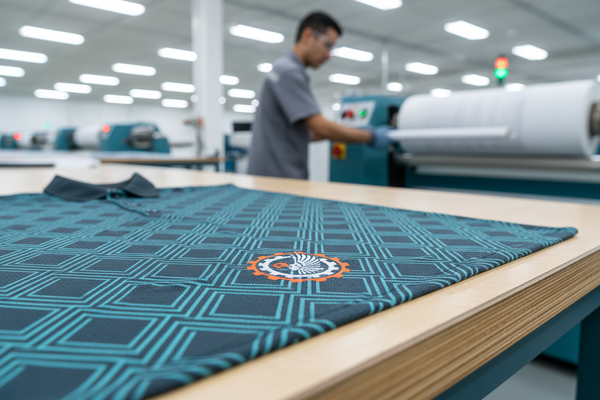
Walking through an active sewing facility gives you immediate insight into how a factory manages operational precision. During sampling for a similar program across three production facilities, seeing how raw materials moved from spreaders to assembly lines revealed exactly how much care went into every step. A clean, well-lit floor with clear bundle tracking tags usually signals an operation that takes real pride in its output.
Conducting an On-Site Technical Facility Floor Audit allows sourcing teams to review cutting table precision, needle replacement logs, and presser foot calibrations firsthand. One team we worked with noticed that verifying needle bar alignment on automatic pocket setters eliminated subtle thread tension variations across a 5,000-unit knit top order. Taking an hour to check machine settings before mass production saved days of manual adjustment later.
In our experience, watching an in-line inspector check garments at the 15% completion milestone is where real quality magic happens. At this stage, operators catch minor pattern adjustments or seam allowance variations while the rest of the fabric is still being cut. This quick feedback loop keeps the sewing lines running smoothly and gives floor supervisors complete confidence in the final output.
Factories see this pattern regularly: facilities that maintain daily equipment maintenance logs and clear lighting over finishing tables consistently produce beautiful, uniform garments. When you tour a facility, take a moment to look at the light boxes in the color approval room. Having standardized illumination ensures that trim colors and main fabrics match effortlessly under both retail store lighting and natural sunlight.
3. Standardizing Specs: Testing, Shrinkage, and Color Measurement
Translating creative design concepts into repeatable factory specs requires grounding your requirements in standard textile physics. Buyers often assume fabric weight alone dictates garment performance. In practice, what actually determines how a garment holds up through repeated wear is the combination of yarn twist, dye fixation, and dimensional stability finishing. Setting clear lab standards removes all guesswork from the equation.
Take fabric shrinkage as a classic example. When developing a fleece hoodie or cotton tee, verifying fabric performance under AATCC Laundering Shrinkage Standards ensures that garments retain their tailored silhouette after home washing. Subjecting test swatches to three standardized wash cycles allows engineers to adjust pattern dimensions by roughly 2% or 3% upfront, ensuring the final washed product lands exactly on spec.
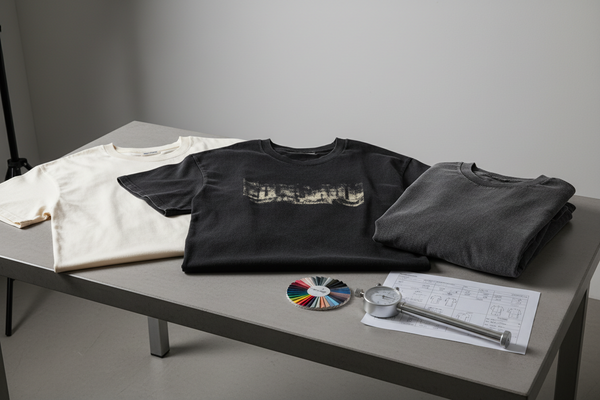
Does digital color testing replace physical lab dips? In practice, combining both methods yields the most consistent shade consistency across different dye lots. Utilizing Spectrographic Lab Color Validation gives your production team numerical Delta E readings that confirm shade accuracy long before fabric is rolled and shipped to the cutting room.
My advice to most buyers is to keep a physical set of approved master swatches at both your design studio and the factory's QA department. Having tangible references alongside digital spectrographic data makes shade verification fast, simple, and completely objective for everyone involved.
The part that pays off most is establishing clear tolerance windows for every key measurement point on your spec sheet. Giving your sewing team a clear plus-or-minus half-inch allowance on chest widths or body lengths allows for natural textile relaxation while guaranteeing that every shirt fits your customers comfortably.
4. Operational Resilience and Risk Protection Strategies
A great inspection workflow does more than verify garment construction; it strengthens your entire supply chain against unexpected scheduling bumps. Building flexibility into your production planning allows you to handle seasonal demand spikes smoothly without compromising on product quality or shipping dates.
For example, implementing Down-Payment Financial Risk Containment structure ties financial milestones to verified quality checkpoints. A standard structure of 30% deposit upon order placement, with the remaining 70% balance released upon receipt of a passing pre-shipment inspection report, keeps incentives perfectly aligned between buyer and manufacturer throughout the production timeline.
During a high-volume holiday production run for a growing activewear line, unexpected regional power maintenance threatened to delay finishing timelines by close to two weeks. Because the brand had established Redundant Manufacturing Toll Re-Routing protocols with an approved secondary facility nearby, they transferred cut panels to a partner facility for final cover-stitching and packaging without missing their port delivery window.
One thing that consistently pays off is keeping an open, collaborative dialogue with your factory's production planner. When supervisors know you value quality over rushed shortcuts, they feel empowered to raise minor questions early, ensuring every shipment meets your exact standards. Let's look at a practical reference guide for structuring your quality checkpoints.
5. The On-Site Inspection Protocol and Decision Guide
Having a structured checklist makes on-site inspection visits efficient, thorough, and easy to execute for your internal teams or third-party audit partners. The table below outlines how primary inspection choices match up with specific order parameters and production scales:
| Inspection Approach | Primary Focus Area | Sampling Volume | Key Advantage | Best Suited For |
|---|---|---|---|---|
| Pre-Production Sample Approval | Pattern fit, grading & construction layout | 1 - 3 prototype units | Locks in specs before fabric cutting begins | New style launches & custom development |
| In-Line Sewing Audit | Seam tension, needle calibration & assembly flow | 15% to 20% of live run | Catches assembly adjustments early in assembly | Large volume orders & complex outerwear |
| Pre-Shipment AQL 2.5 Check | Visual finish, dimensions, trims & packaging | Statistical sample per ISO 2859-1 | Validates entire order before balance release | Standard retail apparel & workwear runs |
| 100% Piece Inspection | Flawless visual detail & exact embellishment | 100% of finished goods | Guarantees complete piece-by-piece perfection | High-end luxury capsules & limited runs |
Should you hire a third-party inspection agency or send your own team? In practice, using an independent third-party agency for overseas production run checks saves significant travel costs while delivering standardized, photo-documented reports within 24 hours of inspection completion.
A common outcome when this step gets skipped is discovering minor packaging or barcode label misplacements after cartons land at your distribution center. Spending an hour verifying inner bag warning labels, carton side-marks, and retail hangtag placements during the pre-shipment audit ensures your warehouse team can check goods in effortlessly.
If I had to choose one area to focus on during a quick floor check, I'd pick trim attachment and zipper functionality every time. Smooth zipper slides and firmly set snaps immediately signal quality craftsmanship to your end customer, reinforcing your brand's reputation for reliability.
By organizing your quality checks into distinct stages—pre-production, in-line, and final pre-shipment—you build a smooth manufacturing process that protects your investment while building lasting trust with your supplier network.
6. Mastering Quality Inspections for Long-Term Supplier Growth
Mastering the apparel inspection process transforms quality control from a final gatekeeping step into a strategic asset for business growth. When you treat quality verification as an ongoing dialogue with your manufacturing partners, every production run becomes smoother and more efficient than the last.
As your order volumes expand, sharing digital inspection reports and performance metrics with your factory management helps identify continuous improvement opportunities. Celebrating high pass rates and smooth delivery runs fosters a genuine spirit of partnership, encouraging factories to reserve their top sewing lines and master operators for your upcoming collections.
Ultimately, a well-executed inspection framework gives you total peace of mind. Knowing that your garments have been verified against clear AQL standards, tested for dimensional stability, and approved through rigorous floor checks lets you focus on what you do best: growing your brand, serving your customers, and designing fantastic products.
By combining clear specs, collaborative factory audits, and reliable third-party sampling, you set a standard of excellence that elevates your entire product line. Clear standards build exceptional garments, and exceptional garments build lasting customer loyalty.