Where does this clothing actually come from?From Factory Excess to Your Shelves The Lifecycle of a Garment at ApparelLots
From Factory Excess to Your Shelves
The Lifecycle of a Garment at ApparelLots
In the global fashion economy, "excess" is often treated as a mistake. But at ApparelLots, we see it as an opportunity. Every year, millions of high-quality garments are manufactured but never reach the retail floor—not because of flaws, but because of the complex machinery of modern supply chains. Whether it’s a cancelled order from a major retailer, a factory over-run, or a logistical shift in seasonal demand, premium clothing frequently finds itself in a state of "limbo."
This article explores the rigorous, transparent, and highly efficient journey of these garments. We pull back the curtain on how ApparelLots identifies value where others see waste, and how we transform industrial volume into curated retail opportunities for boutique owners and online resellers across the globe.
Phase 1: The Genesis of Excess
To understand the value of an ApparelLots shipment, you must first understand why it exists. The "Factory-to-Shelf" model of traditional retail is incredibly rigid. Factories in major manufacturing hubs often work on 6-month lead times. If a major US retailer over-forecasts demand for a specific summer dress by just 5%, they are left with thousands of units that they literally cannot store in their retail locations.

This is where "Primary Sourcing" happens. ApparelLots maintains direct pipelines into these factories and retail distribution centers. We aren't buying from second-hand liquidators; we are often the first point of contact for manufacturers looking to clear warehouse space for the next season's production run.
Phase 2: Acquisition & The "Grade" Filter
Aggressive Selection
We don't buy everything. Our procurement team uses a "Resale-First" filter. We analyze current market trends on platforms like eBay, Poshmark, and independent boutique networks to ensure that the lots we acquire will actually turn a profit for our clients.
Centralized Intake
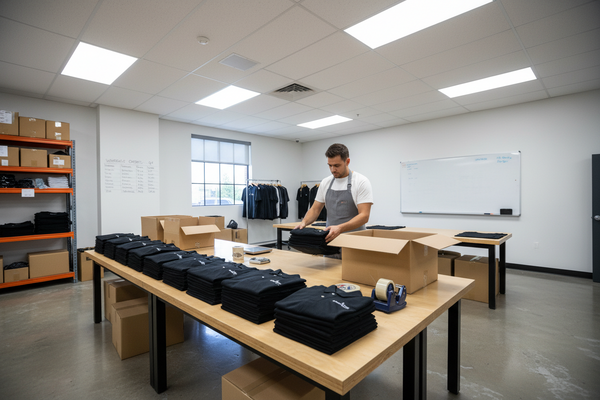
Once acquired, inventory moves to our central sorting facilities. Here, the "Unmanifested Bulk" is transformed into "Strategic Lots." We break down massive industrial crates into manageable pallets and boxes tailored for small-to-mid-sized businesses.
Phase 3: The ApparelLots Quality Protocol
The biggest fear in wholesale is receiving damaged goods. At ApparelLots, our quality control is human-centric. While we use technology for inventory tracking, we use human hands for inspection. Every lot undergoes a sampling protocol where we check for:
- Label Authenticity: Ensuring brand integrity and original tagging.
- Hardware Integrity: Testing zippers, buttons, and fasteners on a representative sample.
- Size Distribution: Verifying that the lot isn't "weighted" heavily toward non-standard sizes.
| Inventory Type | Source Origin | Condition Expectation |
|---|---|---|
| Factory Overstock | Direct from Manufacturer | Brand New, Master Case |
| Retail Shelf Pulls | Department Stores | New with Tags, Displayed once |
| Seasonal Closeouts | Brand Distributors | End of Season, Pristine |
Phase 4: Data-Driven Distribution
In the digital age, a wholesaler is only as good as their data. This is why we focus heavily on **Manifested Lots**. When you browse ApparelLots, you aren't just looking at pictures; you are looking at data. Our manifest system provides you with the breakdown of what you are buying, allowing you to calculate your ROI (Return on Investment) before the pallet even leaves our warehouse.

This transparency is what allows our clients to scale. If you know you are receiving 40% Women's Tops and 60% Bottoms, you can begin pre-marketing to your customer base or preparing your social media "live sales" while the shipment is in transit.
Phase 5: Final Delivery & The Boutique Shelves
The final stage of the lifecycle is the most rewarding. We utilize optimized logistics to ensure that wholesale shipping costs don't kill your margins. By utilizing palletized shipping and optimized box dimensions, we move more garments per cubic foot than the industry average.
When the box arrives at your boutique or home-based warehouse, the garment's lifecycle comes full circle. It has moved from a "logistical problem" for a factory to a "business solution" for you. At ApparelLots, we take pride in being the bridge that makes this possible.